SEO and AI visibility for SaaS & software.
Software buyers increasingly start with AI. Providers need a clear category, honest comparisons and independent sources to appear on a shortlist.


Our clients
 Niccos — Shopify & e-commerce
 Touchpoint Amplify — Google Ads agency
 NEONA — Designer lighting & e-commerce
 Ad Specialist — Performance marketing agency
 Insel Gruppe — Bern University Hospital
 Bluerails — Agentic booking for hotels
 voids.ai — Supply-chain SaaS
 SPIELMANN Steuerberatung GmbH — Tax consulting
 PUNKT PR — PR agency
 myAutoAbo — Car subscription comparison
The review starts with “What is the alternative to X?”
No segment has shifted the provider search as quickly as software. The shortlist is created in an AI response before anyone opens your website or speaks to sales. And the crucial question is rarely “which tool is the best”, but rather “what is the alternative to X” - answered by comparison portals that do not belong to you.
Whether B2B platform, vertical software, developer tool or marketplace: The leverage lies in docking into the category in which your market is actually looking, answering the question of alternatives yourself and disclosing the details on which the decision depends.
What changes
- You will be mentioned as an alternative when someone searches for the competitor you are competing against.
- Pricing logic, integrations, migration and data protection are located on the page instead of behind “request a demo”.
- Your category is the one being searched for; not the one in the pitch deck.
What we do for SaaS & software.
Define the category
First the language of the buyers, then your own positioning. No system can classify a self-invented category.
Alternative pages
A separate side for each competitor against whom you actually compete - with at least one point on which the other side is better suited.
Explain pricing and limits
Model, scale and price driver. If you can't name fixed prices, use logic - "Request a demo" doesn't answer the question.
Integrations and migration
Dedicated pages for the systems you dock into and for switching competitors. Both are partial questions of fan-out.
Privacy and security
Data location, certifications, processing and deletion concepts as a readable page instead of as a PDF in the trust center.
Independent sources
Rating platforms, specialist media, integration directories and customer contributions; the part that takes the longest and has the strongest impact.
How is software recommended by AI?
No segment has shifted the provider search as quickly as software. According to HubSpot State of AI (2025), 52% of provider searches in SaaS and tech are already done via AI assistants - the highest value of all industries surveyed, well ahead of health (41%) and finance (38%). The review begins before the first visit to the website and often before the first contact with sales.
The initial value is also the best we measure: 28 out of 100 in the industry benchmark for SaaS and tech. That's above average and still low - the top group is 80+. In hardly any other industry is the gap between average and top so large, which means that visibility is a real competitive advantage and not a hygiene factor.
The crucial question is rarely “which tool is the best”, but rather “what is the alternative to X”. Today, comparison portals, listicles and forums answer this question - i.e. sources that do not belong to you. If you don't build your own alternatives and comparison page yourself, you leave the classification of your own product to the competition and any third parties.
There is also a category problem. Many SaaS providers describe themselves in a self-invented category that no one is looking for. A system can only recommend a product where it is classified: Anyone who positions themselves as a “workflow intelligence platform” but competes against project management tools will not be present in the actual search query. Your own language must match the language of the buyers before you can change it.
The third lever is structure. Google AI Mode breaks down a query into eight to twelve sub-questions and only has around 12% overlap with the classic Google top 10. For software, this means: pricing model, integrations, data protection, migration, limits and support are not second-order sub-pages, but exactly the sub-questions that are asked in the expanded AI search.
And finally, it's who talks about you that counts. AI systems give much greater weight to independent sources than self-representation. Review platforms, specialist media, integration directories of the platforms you are based on and contributions from your customers are the part that no landing page, no matter how good it is, can replace - and the part that takes the longest.
- 52 %
- AI share in SaaS provider search
- Source: HubSpot State of AI, 2025
- 28 / 100
- Average SaaS & Tech
- Source: getSichtbar industry benchmark, 2026
- 80+
- Top group score in SaaS
- Source: getSichtbar industry benchmark, 2026
- 12 %
- Overlap AI Mode with Google Top 10
- Source: Google AI Mode, 2026
Buying questions AI answers in this industry.
“What is the best alternative to this tool?”
“Which software solves this problem for our company size?”
“How secure is our data and where is it located?”
We ask these questions across ChatGPT, Gemini, Perplexity, Claude and Google, then record which companies are named.
What holds visibility back for SaaS & software.
The category is unfamiliar to buyers.
The product describes itself in a language that no one is looking for. Systems can't classify it anywhere - and it doesn't appear in the question you're actually fighting against.
Others answer the alternatives question.
“Alternative to X” is one of the most frequently asked questions in software purchasing. It is answered by comparison portals and listicles that at best mention you in passing - and at worst misclassify you.
Details relevant to the purchase are hidden.
Pricing model behind “Request a demo”, integrations as a logo wall, data protection as a PDF. It is precisely this information that is the sub-question that decides - and it cannot be found by systems.
How we make SaaS & software visible.
Define the category
The buyer’s language first, your own positioning second. Without connection there is no classification.
Cover alternatives yourself
Your own comparison and alternative pages for the competitors against whom you actually lose - with honest concessions.
Answer partial questions
Price, integrations, migration, data protection, limits, support: a page each that really answers the question.
Build independent sources
Rating platforms, specialist media, integration directories; the part that takes the longest and has the strongest impact.
How working with us goes.
Four steps from the first call to ongoing delivery. The process is the same for every service.
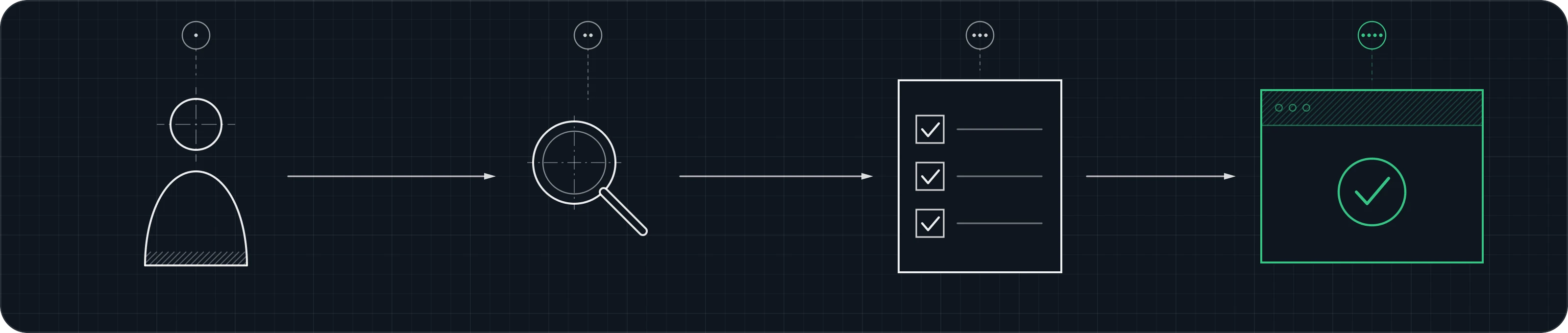
First call
In 15 minutes we clarify your category, your goal and where you stand in Google and in AI answers today.
Analysis
Our platform runs real buying questions through ChatGPT, Gemini, Perplexity, Claude and Google and shows which providers get named and which evidence you are missing.
Plan
You receive a prioritised plan with sequence, effort and expected impact. Then you decide whether we work together.
Delivery
We implement, measure mentions, rankings and traffic every month and report in a shared Slack channel.
Related projects.
Comparable projects from our work. Results and timeframes appear on each case page.
The services that work together for SaaS & software.
Generative Engine Optimization
We check buyer questions in ChatGPT, Perplexity, Claude and Google. If your company is missing, we build the missing evidence.
Learn moreDigital PR for GEO
We build press, backlinks and sources so AI systems can support claims about your company.
Learn moreInternational SEO and multilingual AI search
We build market, language and domain structures that search and AI systems understand without merely translating pages.
Learn moreContent strategy & blog
We plan and produce guides, comparisons and expert articles along real buying questions, connect them to your service pages and measure which of them bring enquiries.
Learn moreThe systems we work with for SaaS & software.
ChatGPT (German)
Technical background. This page is in German.
Mehr erfahrenGoogle Gemini und AI Overviews (German)
Technical background. This page is in German.
Mehr erfahrenPerplexity (German)
Technical background. This page is in German.
Mehr erfahrenShopware (German)
Technical background. This page is in German.
Mehr erfahrenMore to read about this industry.
GEO for SMEs: why I wrote the book
The book turns AI visibility into a practical system for SMEs, B2B marketing teams and agencies.
ReadFound on Google, recommended by ChatGPT: Local SEO becomes GEO
Local providers need more than Maps rankings. The book shows how Google, reviews, location pages and AI visibility work together.
ReadQuery Fan Out: Definition, Workflow and SEO Strategy for 2026
Query fan out is the process of expanding one user buyer question into multiple related subqueries, retrieving evidence for each, and combining the results into...
ReadGEO-Agentur (German)
Further reading. This page is in German.
ReadKI-Sichtbarkeit (German)
Further reading. This page is in German.
ReadKI-Sichtbarkeit selbst prüfen (German)
Further reading. This page is in German.
ReadKI-Sichtbarkeit für lokale Unternehmen: Der 30-Tage-Plan (German)
Further reading. This page is in German.
ReadAI Sichtbarkeit messen: So prüfst du ChatGPT-Empfehlungen, GEO Score und echte KI-Präsenz (German)
Further reading. This page is in German.
ReadAI-Sichtbarkeit Zahnarzt: So wird deine Praxis in ChatGPT & Perplexity empfohlen (statt bei Jameda zu verschwinden) (German)
Further reading. This page is in German.
ReadWhat you get.
We start by asking in which category your market is actually searching and by measuring who is mentioned there today. This determines which pages are built first.
When we are not the right fit.
In SaaS, a lot is decided by a single question: What is the alternative to X? If you don't build this page yourself, you let comparison portals determine how your own product is classified. And no one believes a comparison page that doesn't concede anything to the competitor - neither the buyer nor the system.
Felix Ament, Founder, getSichtbar GmbH
What our clients say.
Quotes from founders and managing directors we work with. Where a case exists, the number sits next to it.
“No fuckin way, Felix Ament is the GOAT. Within weeks, NICCOS was #1 on ChatGPT and Claude. Our organic inbound leads have exploded thanks to getSichtbar.”
+761 %
more impressions in 3 months

“In the first month, the first request came in with the line: 'ChatGPT recommended you to me.' That is exactly why we use getSichtbar.”
+980 %
more organic conversions in 3 months



Common questions about SaaS & software.
Do we have to publish our prices?
At least a model and a scale. “Request a demo” doesn’t answer the question, and systems can’t quote something that isn’t there. If you can't name fixed prices, say the price logic: what is billed for and what drives the price.
Should we really build pages about competitors?
Yes, if you actually compete against them. The question will be asked and answered anyway. Honesty is important: at least one point on which the other side is better should be on the side - otherwise it will seem like advertising and will be weighted accordingly.
What about review platforms?
They are an important component because AI systems give greater weight to third-party sources than your own website. But they don't replace your own pages: the portal says that you exist and how satisfied your customers are, and on your site it says in which case you are the right choice.
We are international. Does this count separately for each language?
Yes. The systems respond from different sources for each language, and the competitive situation sometimes differs considerably. We therefore measure separately for each language and market, instead of creating an average that incorrectly describes both markets.
When will we start seeing results?
Perplexity is the fastest responsive because it searches live for every request. With ChatGPT and Google it depends on the crawl rhythm, realistically four to eight weeks per page. Building independent sources takes months, not weeks.
How does this relate to classic SEO?
The technical basis is the same, the channels are not. According to Ahrefs (January 2026), only 38% of the pages cited in AI Overviews were in Google's top 10. Rankings and mentions therefore need their own decisions - counting the same measure twice is misleading.
How do you measure progress?
For each purchase and alternative question, we track monthly which providers are mentioned and which source the answer is provided. There are also rankings and hits per page. Test registrations are the late indicator, mentions are the early indicator.
What doesn't this work solve?
It does not replace any product. If a function is missing that makes a difference in the comparison, this will become visible even with perfect pages - but then earlier and more clearly, which is usually useful.
GEO agency from Stuttgart and Hamburg.
Headquarters in Ostfildern near Stuttgart, office in Hamburg. We support companies across Germany, Austria and Switzerland, remotely and on site by arrangement. City pages are in German.
Talk to us about your visibility.
15 minutes, straight from the calendar. Before the call we check which providers AI names in your category and bring the result.

Felix Ament
You talk to me directly.
What happens in the call
- We show which providers ChatGPT, Gemini, Perplexity and Google name for buying questions in your category.
- We show which sources support those answers and where competitors stand.
- We name the evidence your brand is missing today.
- You get the next step with the biggest effect. No obligation.