First the offer, then the visibility.
We check what your market actually searches for and develop your offer toward it. Only then do we build SEO and GEO on top.


Our clients
 Niccos — Shopify & e-commerce
 Touchpoint Amplify — Google Ads agency
 NEONA — Designer lighting & e-commerce
 Ad Specialist — Performance marketing agency
 Insel Gruppe — Bern University Hospital
 Bluerails — Agentic booking for hotels
 voids.ai — Supply-chain SaaS
 SPIELMANN Steuerberatung GmbH — Tax consulting
 PUNKT PR — PR agency
 myAutoAbo — Car subscription comparison
From market to page.
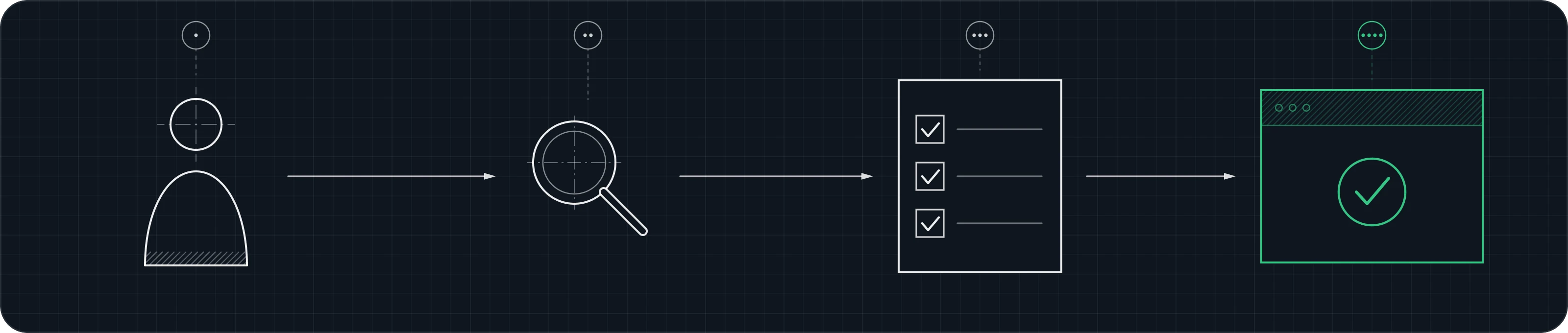
Four steps, every decision tied to data.
Read demand
Search volume via the Google Ads API, buyer questions from AI systems.
Sharpen the offer
Which service meets demand? What is missing, what gets cut?
Build structure
Every purchase-relevant service gets its own page with a clear job.
Measure
Rankings, inquiries and AI mentions per service page.
Strategic SEO in practice.
Documented projects with figure, period and the work behind them.
 AGS IT-Service - Healthcare IT
+115 %
more impressions in 4 months
How a clear medical IT site structure doubled visibility in a regulated niche.
SPIELMANN Steuerberatung GmbH - Tax consulting+319 %
more impressions in 3 months
How a digital tax advisory firm gained visibility in three months.
 Seedwise - Grant consulting
+447 %
more impressions in 3 months
How complex funding topics became findable decision pages.
What you get and who it fits.
What you get
- Demand report with search volume per topic
- Offer recommendation with reasoning
- Prioritised page plan
- Implementation or briefings
A fit if
- You can actually develop your offer.
- You accept that data may also say no.
- You want to measure revenue, not collect rankings.
Not a fit if
- You only want a report and no implementation.
- You expect a guaranteed mention in one exact AI answer.
- Your offer is not clear enough to recommend yet.
How working with us goes.
Four steps from the first call to ongoing delivery. The process is the same for every service.
First call
In 15 minutes we clarify your category, your goal and where you stand in Google and in AI answers today.
Analysis
Our platform runs real buying questions through ChatGPT, Gemini, Perplexity, Claude and Google and shows which providers get named and which evidence you are missing.
Plan
You receive a prioritised plan with sequence, effort and expected impact. Then you decide whether we work together.
Delivery
We implement, measure mentions, rankings and traffic every month and report in a shared Slack channel.
What our clients say.
Quotes from founders and managing directors we work with. Where a case exists, the number sits next to it.
“No fuckin way, Felix Ament is the GOAT. Within weeks, NICCOS was #1 on ChatGPT and Claude. Our organic inbound leads have exploded thanks to getSichtbar.”
+761 %
more impressions in 3 months

“In the first month, the first request came in with the line: 'ChatGPT recommended you to me.' That is exactly why we use getSichtbar.”
+980 %
more organic conversions in 3 months



Common questions about Strategic SEO.
What makes strategic SEO different from normal SEO?
The order. Normal SEO optimises a finished offer for search terms. We first check whether the offer meets demand — and change the offer instead of the texts if needed.
Where does your search volume come from?
Exclusively from the Google Ads API. We never use tool estimates or AI-generated numbers as a basis for decisions.
What if there is no search volume for our service?
Then we say so. Some offers are recommended or actively sold rather than searched — then AI answers, press work or sales beat a service page. This honesty saves the most expensive SEO: pages nobody searches for.
Does this require a website relaunch?
Rarely. Usually structure and individual pages change, not the whole website. A relaunch without demand analysis is the most expensive way to keep the same problem.
How fast do we see results?
The demand analysis is done in two to three weeks. First movement per new page usually shows after four to eight weeks.
What works together here.
Talk to us about your visibility.
15 minutes, straight from the calendar. Before the call we check which providers AI names in your category and bring the result.

Felix Ament
You talk to me directly.
What happens in the call
- We show which providers ChatGPT, Gemini, Perplexity and Google name for buying questions in your category.
- We show which sources support those answers and where competitors stand.
- We name the evidence your brand is missing today.
- You get the next step with the biggest effect. No obligation.