Make products discoverable before the cart begins.
We connect categories, product data, merchant feeds, internal search, content and AI shopping into a purchasable search system.


Our clients
 Niccos — Shopify & e-commerce
 Touchpoint Amplify — Google Ads agency
 NEONA — Designer lighting & e-commerce
 Ad Specialist — Performance marketing agency
 Insel Gruppe — Bern University Hospital
 Bluerails — Agentic booking for hotels
 voids.ai — Supply-chain SaaS
 SPIELMANN Steuerberatung GmbH — Tax consulting
 PUNKT PR — PR agency
 myAutoAbo — Car subscription comparison
Demand to product.
Assortment, data and content are optimised as one system.
Cluster demand
Give categories, products and guides clear intent boundaries.
Align data
Match titles, attributes, variants, availability, schema and feed.
Build paths
Navigation, filters and links connect questions to products.
Measure revenue
Connect visibility with product and category performance.
E-commerce SEO and AI shopping in practice.
Documented projects with figure, period and the work behind them.
NEONA - Designer lighting & e-commerce+315 %
more conversions from AI assistants in 3 months
How a lighting store used Sphen to reach more buyers through ChatGPT, Gemini and Perplexity.
 William Walker - Premium dog accessories
+60 %
more impressions in 3 months
How an established product range grew through category and guide pages.
Niccos - Shopify & e-commerce+761 %
more impressions in 3 months
How a Shopify relaunch led to more organic demand.
What you get and who it fits.
What you get
- E-commerce SEO roadmap by revenue lever
- Category and product briefs
- Technical tickets for filters, schema and feeds
- Measurement by page type and product group
A fit if
- Product data and templates can be changed.
- Assortment, margin and availability can guide priorities.
- You want revenue paths rather than generic traffic.
Not a fit if
- You only want a report and no implementation.
- You expect a guaranteed mention in one exact AI answer.
- Your offer is not clear enough to recommend yet.
How working with us goes.
Four steps from the first call to ongoing delivery. The process is the same for every service.
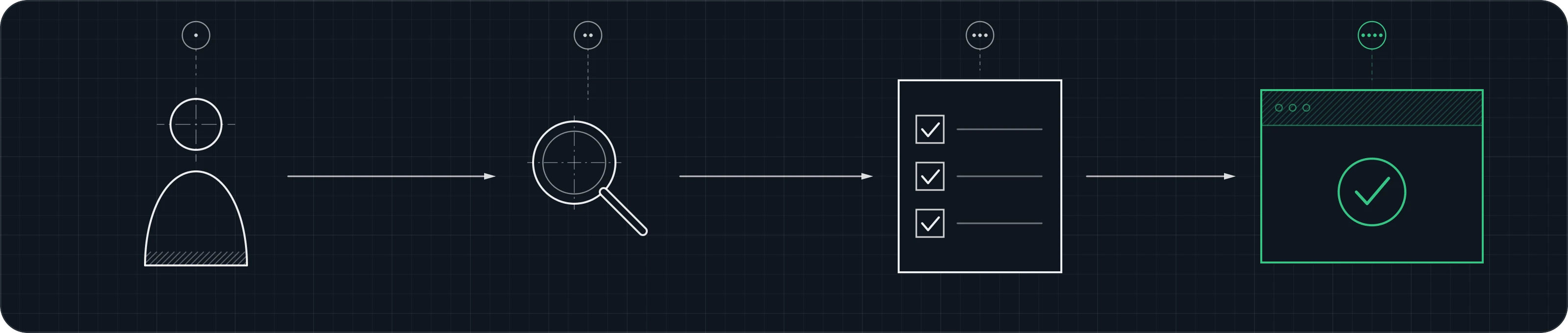
First call
In 15 minutes we clarify your category, your goal and where you stand in Google and in AI answers today.
Analysis
Our platform runs real buying questions through ChatGPT, Gemini, Perplexity, Claude and Google and shows which providers get named and which evidence you are missing.
Plan
You receive a prioritised plan with sequence, effort and expected impact. Then you decide whether we work together.
Delivery
We implement, measure mentions, rankings and traffic every month and report in a shared Slack channel.
What our clients say.
Quotes from founders and managing directors we work with. Where a case exists, the number sits next to it.
“No fuckin way, Felix Ament is the GOAT. Within weeks, NICCOS was #1 on ChatGPT and Claude. Our organic inbound leads have exploded thanks to getSichtbar.”
+761 %
more impressions in 3 months

“In the first month, the first request came in with the line: 'ChatGPT recommended you to me.' That is exactly why we use getSichtbar.”
+980 %
more organic conversions in 3 months



Common questions about E-commerce SEO and AI shopping.
Do you only work with Shopify?
No. Shopify is a focus with dedicated services, but the method works with other platforms when templates, product data and feeds are accessible.
What gets optimised first?
Page types and product groups with proven demand, margin and availability. An unavailable edge product does not become a priority because its copy is short.
Does every product need unique copy?
No. It needs clear, correct and useful data. For similar variants, attributes, selection help and consistency often matter more than artificially different paragraphs.
Is AI shopping really SEO?
The inputs overlap heavily: product page, feed, schema, reviews and sources. We still measure the output separately because search results and AI recommendations behave differently.
What works together here.
Talk to us about your visibility.
15 minutes, straight from the calendar. Before the call we check which providers AI names in your category and bring the result.

Felix Ament
You talk to me directly.
What happens in the call
- We show which providers ChatGPT, Gemini, Perplexity and Google name for buying questions in your category.
- We show which sources support those answers and where competitors stand.
- We name the evidence your brand is missing today.
- You get the next step with the biggest effect. No obligation.