SEO and AI visibility for Shopify & e-commerce.
Product data matters more than advertising copy. AI shopping systems read feeds, schema and product pages, then recommend products they can understand. We make catalogs machine readable and measure the impact by product.


Our clients
 Niccos — Shopify & e-commerce
 Touchpoint Amplify — Google Ads agency
 NEONA — Designer lighting & e-commerce
 Ad Specialist — Performance marketing agency
 Insel Gruppe — Bern University Hospital
 Bluerails — Agentic booking for hotels
 voids.ai — Supply-chain SaaS
 SPIELMANN Steuerberatung GmbH — Tax consulting
 PUNKT PR — PR agency
 myAutoAbo — Car subscription comparison
Accurate product data gives AI a reason to recommend your product.
In retail, it is not the advertising text that decides, but the product data. AI systems and buying agents read the feed, schema, and product page; and recommend what they fully understand. If information is missing or contradicts itself, no agent asks, they name a different product.
Whether fashion, furniture, technology or spare parts: We work on product titles, attributes, variants, category texts, feeds and availability - the places where catalogs actually fail. For hundreds of items, software takes over the checking; the approval remains with you.
What changes
- Your products will appear when someone asks ChatGPT or Perplexity for a purchase recommendation in your category.
- Feed, schema, and product page say the same thing; the most common reason products are skipped is eliminated.
- Buying agents find availability, variants and shipping conditions without having to ask.
What we do for Shopify & e-commerce.
Catalog audit per product
We check each article for missing attributes, weak descriptions, and mismatches between feed, schema, and page. The result is a gap list, not a single aggregate score.
Product and category texts
Revised texts that answer buyers' questions instead of piling up adjectives; as a draft on the review board, never automatically published.
Feed and schema matching
Bring Merchant Center feed, product schema, and visible page to the same level. Contradictions are where most catalogs lose.
Preparation for purchasing agents
Availability, variants, compatibility, shipping and returns conditions must be stored so that ACP and UCP can work with them.
Technical SEO for the shop
Loading time, facets, pagination, internal linking and indexing; the basis without which even perfect product data cannot arrive.
Measurement per product group
Visibility in Google and AI Shopping per product group, compared to unedited articles. This is the only way to separate the effect from the seasonal effect.
How do Shopify stores become visible in AI responses?
Product research is shifting. According to HubSpot State of AI (2025), 43% of consumers use AI assistants to replace Google when researching products, and 68% trust AI recommendations when making purchasing decisions. For e-commerce, the average AI visibility score in our measurements is 25 out of 100 - the range between average and top 10 percent (75+) is hardly greater in any industry.
A second shift is technical: Since October 2025, ChatGPT has been able to trigger purchases via the Atlas Browser and the Agentic Commerce Protocol (4% merchant fee), and since January 2026 there has been a fee-free alternative with the Universal Commerce Protocol from Google and Shopify. This means that the purchasing agent is no longer a hypothetical scenario, but rather a channel with its own data requirements.
What slows shops down is rarely marketing. It's product data: missing attributes, conflicting information between feed, schema, and product page, and descriptions that don't answer buyers' questions. An agent who can't resolve a claim doesn't recommend the product; he doesn't ask.
The quantity makes matters worse. A catalog with several hundred items cannot be checked for completeness by hand, and automatic optimization tools solve the problem by making it invisible: They change hundreds of texts at once without anyone being able to understand which change had which effect. The catalog is thus filled, but the question of the effect remains unanswered.
A division of labor therefore makes sense: software takes care of checking and preparing the entire catalog, while people decide what goes live. This is exactly how SPHEN.AI, our Shopify app developed together with NICCOS, is built. It synchronizes the catalog, finds gaps for each product and presents drafts for approval - nothing is published automatically.
The same practical approach applies to prioritization as in the rest of our work: the products with the largest share of sales and margins come first, not alphabetical order. In most catalogs, a few dozen items account for the majority of the results - they determine whether the work is measurable.
- 43 %
- research with AI
- Source: HubSpot State of AI, 2025
- 68 %
- trust AI recommendations
- Source: HubSpot State of AI, 2025
- 0 % vs 4 %
- UCP vs. ACP fee
- Source: Google/Shopify UCP (Jan 2026), OpenAI/Stripe ACP (Oct 2025)
- 25 / 100
- E-commerce average
- Source: getSichtbar industry benchmark, 2026
Buying questions AI answers in this industry.
“Which product does ChatGPT recommend in our category?”
“Why does the competitor appear in the AI shopping result?”
“Can a purchasing agent order from us?”
We ask these questions across ChatGPT, Gemini, Perplexity, Claude and Google, then record which companies are named.
What holds visibility back for Shopify & e-commerce.
The catalog is too large to check by hand.
Hundreds of products, missing descriptions, contradictory attributes. The team can't keep up and no one knows what change brought what. Auto-optimizers exacerbate the problem: They silently change hundreds of products and the effect is no longer traceable.
Feed and page tell different things.
Merchant center feed, product schema and visible product page differ from each other. For AI systems, this is a contradiction - and contradiction means: no recommendation. It is precisely this consistency that no advertising text can replace.
AI shopping recommends another product.
AI Overviews, ChatGPT Shopping and purchasing agents are already answering product questions today. Anyone who is missing there will lose the purchase before the shop is even visited - and will only see in their own analytics that there is less traffic, not why.
How we make Shopify & e-commerce visible.
Check catalog
Audit per product: data, descriptions, schema, feed comparison. The result is a gap list, not a single aggregate score.
Close gaps
With SPHEN.AI in the approval workflow. Drafts are checked and then adopted - no silent mass changes.
Prepare agents
Structured data for purchasing agents: availability, variants, compatibility, shipping and returns policies.
Measure per product
Visibility in Google and AI Shopping, change after change; instead of a shop average that explains nothing.
How working with us goes.
Four steps from the first call to ongoing delivery. The process is the same for every service.
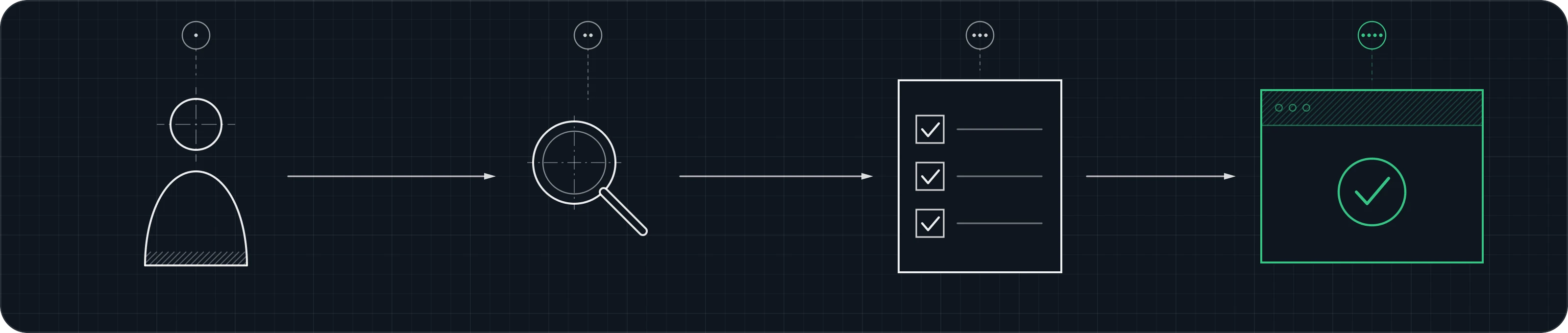
First call
In 15 minutes we clarify your category, your goal and where you stand in Google and in AI answers today.
Analysis
Our platform runs real buying questions through ChatGPT, Gemini, Perplexity, Claude and Google and shows which providers get named and which evidence you are missing.
Plan
You receive a prioritised plan with sequence, effort and expected impact. Then you decide whether we work together.
Delivery
We implement, measure mentions, rankings and traffic every month and report in a shared Slack channel.
Related projects.
Comparable projects from our work. Results and timeframes appear on each case page.
The services that work together for Shopify & e-commerce.
Shopify GEO
We improve Shopify products, categories, content and feeds for Google and AI answers.
Learn moreAgentic Purchase
We prepare PDFs, articles, spreadsheets and product information so purchasing agents can use them.
Learn moreSPHEN.AI for Shopify
SPHEN.AI is our Shopify app for catalog SEO and GEO work: find gaps, review drafts, approve, measure. As software alone or with us as the agency behind it.
Learn moreMore to read about this industry.
D2C Retention Stack: Definition, Workflow and Decision Criteria for 2026
A d2c retention stack is the connected set of systems a direct-to-consumer brand uses after the first order to identify customers, trigger relevant...
ReadPrepare Shopify AI Agents: Architecture, Product Data and Checkout UX for 2026
To prepare Shopify AI agents, fix the commerce system before adding an agent: product data, inventory truth, customer and price logic, access rights, and...
ReadShopify AI Shopping Agents Need Clean Product Data First
Shopify AI shopping agents are conversational systems that turn a buyer’s request into a product recommendation and a valid purchase path using Shopify...
ReadAgentic Commerce Checkliste: Shopify AI Readiness in 30 Tagen prüfen (German)
Further reading. This page is in German.
ReadD2C retention stack 2026: Definition, Aufbau und Entscheidungskriterien (German)
Further reading. This page is in German.
ReadBester E-Commerce Tech Stack 2026: Entscheidungshilfe für Shopify, D2C, B2B und AI Visibility (German)
Further reading. This page is in German.
ReadWhat you get.
At the beginning there is no concept, but rather an inventory of the catalog. This determines what will be built - and in what order. Everything that follows is work product that belongs to you, even if the collaboration ends.
When we are not the right fit.
With hundreds of products, catalog work never fails because of knowledge, but because of quantity. That's why we build software for the masses and leave the approval to the customer. A tool that changes a thousand product texts without asking takes away the very control that you are responsible for in the end.
Felix Ament, Founder, getSichtbar GmbH
What our clients say.
Quotes from founders and managing directors we work with. Where a case exists, the number sits next to it.
“No fuckin way, Felix Ament is the GOAT. Within weeks, NICCOS was #1 on ChatGPT and Claude. Our organic inbound leads have exploded thanks to getSichtbar.”
+761 %
more impressions in 3 months

“In the first month, the first request came in with the line: 'ChatGPT recommended you to me.' That is exactly why we use getSichtbar.”
+980 %
more organic conversions in 3 months



Common questions about Shopify & e-commerce.
Does my shop need a relaunch?
No. The work happens on product data, schema and feed - in the running shop. A relaunch without clean product data doesn't solve the problem, it just moves it to a new theme.
What is the difference between the app and the agency service?
SPHEN.AI is the software: audit, drafts, approval, measurement. As an agency service, we take on the work, you just release it. Same platform, two operating models, changeable at any time.
Where do you start?
We start with a catalog audit. It shows what is missing for each product. Sales share and margin then determine what we address first, rather than alphabetical order in the store.
Do I have to support ACP or UCP?
Not mandatory yet, but the preparatory work is now worth it. Both protocols require complete product data, policies and availability. Anyone who has this is compatible with both - regardless of which one prevails.
When will we start seeing results?
Perplexity is the fastest responsive because it searches live for every request. With ChatGPT and Google it depends on the crawl rhythm, realistically four to eight weeks per product group. That's why we measure monthly instead of once.
Does Shopify SEO still count when AI takes over?
Yes. The technical basis is identical: crawlable, fast, structured. Google also remains the largest single channel. According to Ahrefs (January 2026), only 38% of the pages cited in AI Overviews were in Google's top 10 - so the channels need their own decisions, not the same measure twice.
How do you measure whether the work has had an effect?
For each product group, we track visibility in Google and AI Shopping as well as the mentions in the associated purchasing advice questions. The decisive factor is the comparison with unprocessed products: this is the only way to distinguish whether a change was due to the work or to the season and market.
What doesn't this work solve?
It does not replace a product range decision or a price. If a product simply performs worse in comparison, it will be recommended less often, even with perfect data. And reviews, marketplace presence and editorial mentions are their own leverage outside of the catalog.
GEO agency from Stuttgart and Hamburg.
Headquarters in Ostfildern near Stuttgart, office in Hamburg. We support companies across Germany, Austria and Switzerland, remotely and on site by arrangement. City pages are in German.
Talk to us about your visibility.
15 minutes, straight from the calendar. Before the call we check which providers AI names in your category and bring the result.

Felix Ament
You talk to me directly.
What happens in the call
- We show which providers ChatGPT, Gemini, Perplexity and Google name for buying questions in your category.
- We show which sources support those answers and where competitors stand.
- We name the evidence your brand is missing today.
- You get the next step with the biggest effect. No obligation.